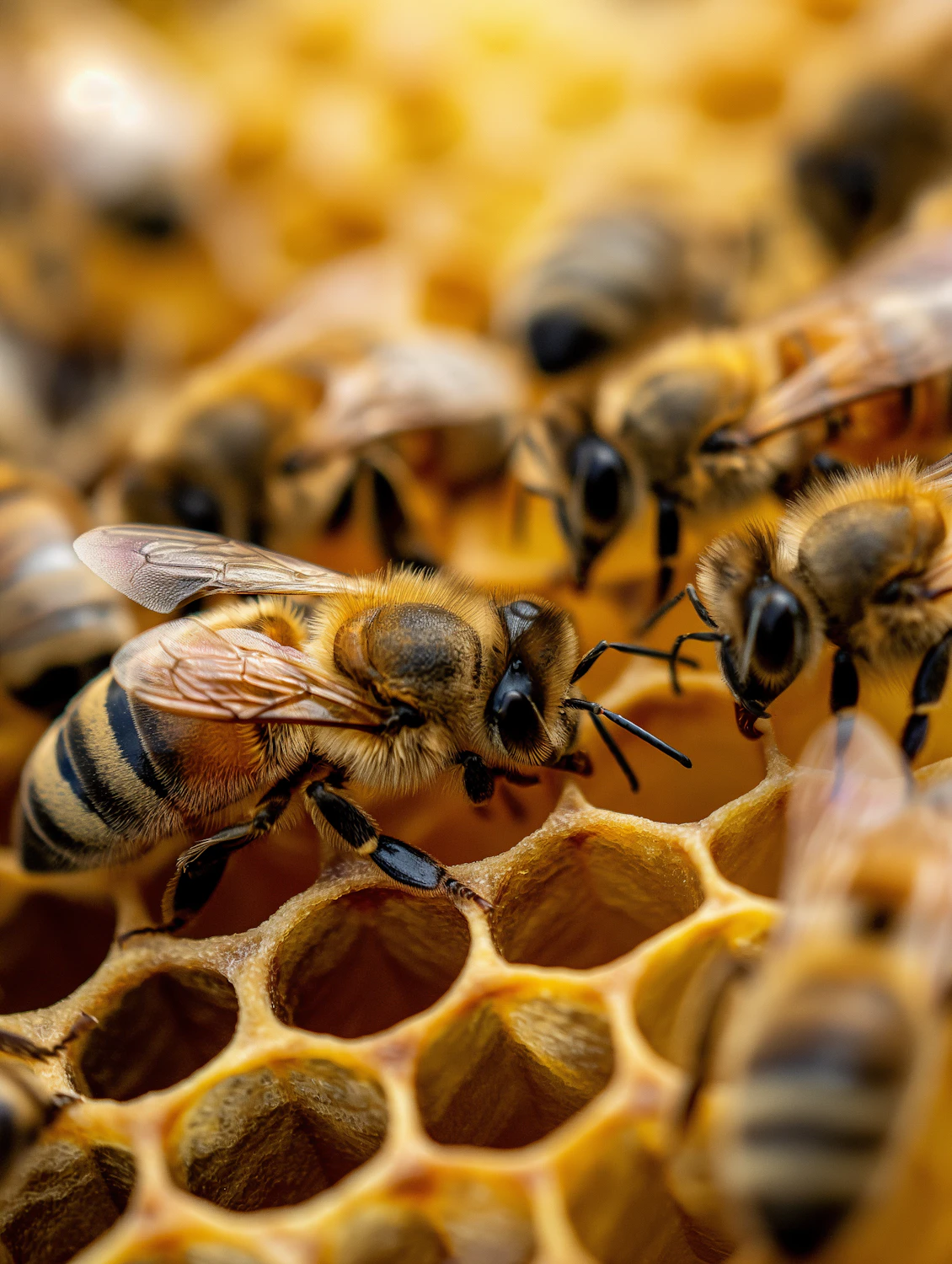
Turning Bees into Business: The Success Story of Honeycomb Haven
Explore the sweet success of Honeycomb Haven, a Vermont-based bee farm, which blends sustainability and community engagement to thrive in the niche organic honey market.
•
W hen Hannah Foster decided to leave her corporate job to launch an organic honey venture, it was a move laden with risk and sweet possibilities. Honeycomb Haven, her small yet thriving bee farm in Vermont, exemplifies how passion when combined with strategic business acumen can lead to entrepreneurial success.
From Vision to Hive
While many dream of escaping the rat race, few actually take the leap. Foster did just that, transforming her small-town roots and fascination with bees into a booming business. Her vision wasn't just to sell honey but also to educate and engage the community about the importance of bees to our ecosystems. To differentiate Honeycomb Haven, she opted for a strong sustainability focus, which also aligned with consumer sentiments towards conscious consumption. By using natural beekeeping practices and eliminating any synthetic additives, her products targeted a niche market craving authenticity and environmental responsibility.
The first few months were filled with the hum of hard work and learning. Foster invested time in mastering the intricacies of beekeeping and the business side of things—understanding pricing, supply chains, and marketing strategies. Attending local farmer markets and free workshops helped her gain firsthand insight. With the initial funds gathered from personal savings and local grants supporting green businesses, she purchased her first set of hives and bees, setting the foundation for what would later become Honeycomb Haven's distinctive brand.
Buzzing into Markets
Foster's success wasn't just from having a product, but from understanding and strategically maneuvering in her market. She embraced digital platforms early, leveraging e-commerce to expand her customer base beyond local markets. Launching a user-friendly website, she shared not just her products but her brand's story which resonated with many. Her transparency about the environmental challenges facing bees and how her business tackles these issues created a trustful connection with her customers.
One of Honeycomb Haven's strategic pivots was to offer educational tours and workshops, inviting schools and nature enthusiasts for firsthand experiences at the bee farm. This unique proposition didn't just augment her revenue streams but also cultivated a community of advocates who became ambassadors for her brand.
Furthermore, to ensure continuous growth and adaptation, Foster partnered with other local businesses, including a small organic farm and eco-friendly retailers, for collaborative product lines and cross-promotional campaigns, effectively tapping into other consumer circles.
Sustaining Sweet Success
A crucial component in Honeycomb Haven's success is its commitment to sustainability. Foster comprehensively incorporated environmentally friendly practices across operations—from sustainable packaging to energy-efficient beekeeping processes. Such dedication not only attracted eco-conscious consumers but also earned her numerous certifications and partnerships which provided additional credibility and marketing leverage.
The story of Honeycomb Haven underlines a significant realization: small businesses thriving on sustainability and differentiation are more apt than ever. As consumers increasingly lean towards conscious buying behaviors, businesses with genuine commitments to community and environment gain a competitive edge.
It also highlights the importance of adaptability and community engagement in scaling a business. Hannah Foster's journey with Honeycomb Haven is a testament to how small businesses can transform challenges into competitive advantages. By marrying passion with purpose and community involvement, small-business owners need not see their size as a limitation but rather as an asset in building tight-knit customer relations and agile business models.
[1] Vermont offers several grants and initiative programs to support sustainable agriculture and small businesses.
[2] The surge in conscious consumerism has led to a 20% increase in demand for organic and sustainable products globally.